
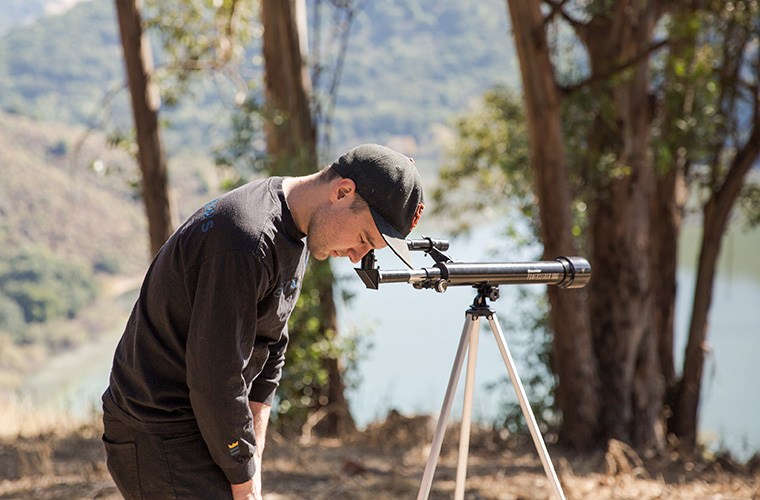
How to Build Your Own Telescope
Double Convex Lens With 11.81-Inch Focal Length
We found this lens perfect for those embarking on building their first telescope, delivering excellent magnification.
- Long focal length enhances image clarity.
- Ideal for novice telescope makers.
- Requires a longer tube for optimal use.
Double Convex Lens With 7.87-Inch Focal Length
This lens is a great choice for those wanting a reliable secondary lens for their DIY telescope.
- High-quality construction ensures durability.
- Perfect for practical telescope projects.
- May not achieve the highest magnification levels.
Double Convex Lens With 3.93-Inch Focal Length
This lens works effectively as an eyepiece for larger telescopes, making it suitable for enhanced viewing.
- Optimally sized for most home-built telescopes.
- Enhances detail in observations.
- Not suitable for use as a primary lens.
Double Convex Lens With 1.97-Inch Focal Length
We found this lens ideal as an eyepiece for smaller telescopes, offering a good balance between size and performance.
- Compact design allows for easy handling.
- Good quality glass for clearer images.
- Limited magnification compared to larger lenses.
Gorilla Black Duct Tape
This tape is a must-have for securing components in your telescope assembly, known for its strong adhesive properties.
- Highly durable and weather-resistant.
- Adheres well to various surfaces.
- Can be difficult to remove without residue.
Buy Now
How to Create Your Own Telescope
Did you know that crafting your own telescope is not only feasible but also an educational experience? With just two lenses and a few easily sourced household items, we were able to complete this intriguing project in a single afternoon.
Building a telescope enhances your understanding of optics and provides the satisfaction of creating scientific equipment that genuinely functions.
Understanding Telescope Types: Reflector vs. Refractor
When it comes to telescopes, there are two primary types: the reflector telescope and the refractor telescope.
Reflector Telescopes
Reflector telescopes operate using mirrors. Light enters through the front, reflects off a primary mirror at the back, and travels to a secondary mirror that directs it to the eyepiece. The eyepiece is located at the front, making it easy to recognise.
Refractor Telescopes
For our project, we will focus on building a refractor telescope. This type utilises lenses to bend and focus light to a specific distance, known as the focal length. The larger lens at the front is the objective lens, while the smaller one at the back is the eyepiece lens. For home models, the objective lens should have a focal length between 8 to 14 inches, while the eyepiece lens should measure 2 to 4 inches.
Step-by-Step Guide to Making a Refractor Telescope
Materials Required
Before we begin, let’s gather our materials:
- Two convex lenses (1.5 inches in diameter): These will determine the magnification based on their focal lengths.
- Two empty cardboard paper towel rolls.
- Scissors.
- Tape: Strong and reliable tape, such as duct tape.
- Glue: A fast-setting adhesive to secure the glass to cardboard. A hot glue gun can also be used.
- A ruler.
- A pencil: A fine-point marker is also suitable.
Building Steps
- Cut one cardboard paper towel roll lengthwise down the centre.
- Overlap the edges of the cut roll by half an inch and secure with tape to create a smaller diameter tube that can slide inside the larger tube.
- Make eight evenly spaced quarter-inch cuts on one end of each roll.
- Fold the flaps inward at a 90-degree angle to create a ledge for the lenses.
- Attach the longer focal length lens to the larger diameter roll, being careful not to glue the viewing side.
- Attach the shorter focal length lens to the smaller diameter roll.
- Insert the smaller roll into the larger one, completing the assembly.
Once your telescope is complete, feel free to experiment by using lenses with different focal lengths. If you opt for larger lenses, consider using mailing tubes or custom tubes made from cardboard.
Using Your Refractor Telescope: Tips
To maximise your telescope experience, keep these tips in mind:
- Focus Using the Tubes: Adjust the smaller tube in and out of the larger tube to focus your view.
- Avoid Direct Sunlight: Never aim your telescope at the sun, as this can severely damage your eyesight.
- Allow Eye Adjustment: At night, let your eyes adjust to the darkness for about 30 minutes.
- Take Breaks: It’s easy to strain your eyes while viewing; regular breaks will help.
Recommended Products for Building Your Refractor Telescope
We have identified some excellent products to assist you in assembling your telescope:
Double Convex Lens With 11.81-Inch Focal Length (1.5-Inch Diameter)
This lens is ideal for the objective of your telescope, ensuring clear visibility.
Double Convex Lens With 7.87-Inch Focal Length (1.5-Inch Diameter)
A reliable lens for your telescope, featuring ground edges for enhanced precision.
Double Convex Lens With 3.93-Inch Focal Length (1.5-Inch Diameter)
This lens works well as the eyepiece for improved viewing.
Double Convex Lens With 1.97-Inch Focal Length (1.5-Inch Diameter)
Perfect for smaller telescopes, this lens offers a great viewing experience.
Gorilla Black Duct Tape
This robust tape is essential for ensuring your telescope parts stay securely attached.
Buy Now
Gorilla 3-Ounce Clear Grip Tube
This clear adhesive is perfect for your assembly needs, providing durable, waterproof hold.
Buy Now
Tru Red 8-Inch Stainless Steel Scissors
If you need quality scissors for this project, these ergonomic scissors are a great choice.
Celestron Portable Refractor Telescope
This compact telescope is a fantastic option for those who prefer not to build their own, offering several accessories.