
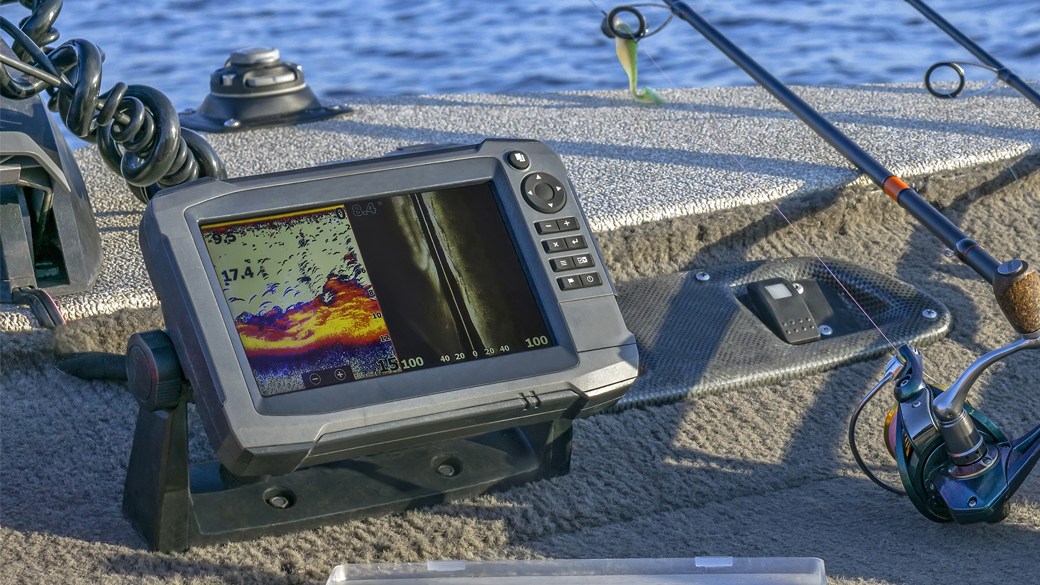
Best Fish Finders for Kayaks
Lowrance Hook Reveal 5 Fish Finder
We found this fish finder ideal for kayakers, offering excellent functionality with a 5-inch waterproof screen.
- Easy to operate with large buttons, perfect for use while fishing.
- Includes maps of over 4,000 U.S. lakes, enhancing navigation.
- Priced on the higher side compared to basic models.
Venterior Portable Fish Finder
This portable fish finder is great for budget-conscious kayakers, offering essential features for an enjoyable fishing experience.
- Compact design makes it easy to attach to your kayak.
- Affordable with decent scanning capabilities for its size.
- The display may be too simplistic for avid anglers.
Humminbird 410230-1 Helix 5
This fish finder is perfect for those seeking a balance of usability and advanced features, making it a solid choice for serious anglers.
- Offers CHIRP dual beam sonar for improved imaging.
- Built-in GPS tracker and a memory card slot for added convenience.
- Lacks a screen protector, which might lead to scratches over time.
Which fish finders for kayaks are best?
Fishing from a kayak can be both relaxing and thrilling. However, the experience can quickly turn frustrating if you’re struggling to locate fish. While some luck is involved, having the right equipment can significantly improve your chances. Your kayak and fishing rod are essential, but to truly enhance your experience, a fish finder is invaluable. We believe the Lowrance Hook Reveal 5 Fish Finder stands out as an excellent choice for those fishing solo or venturing out on a kayak.
Considerations Before Purchasing a Fish Finder for Kayaks
Fixed vs. Portable Fish Finders
Given the limited space in a kayak, visibility of the fish finder’s screen is crucial. You’ll need to consider the placement of the finder, which leads us to the two main types:
- Fixed fish finders: These are permanently installed in your kayak but can be removed with tools if needed.
- Portable fish finders: These are more flexible, often secured with suction cups, making them easy to transport and use.
Power Source for Fish Finders
Like all electronic devices, fish finders require a power source. When choosing one, consider the size of your kayak and the available space for batteries. Most standard fish finders connect directly to a trolling motor battery or use a cigarette lighter on a boat. However, kayaks typically lack these options, so look for models with rechargeable batteries or those that are solar-powered.
Sonar Options
Fish finders utilise sonar technology to scan the water around you:
Downscan: This common type uses sonar pulses directed downwards, ideal for deeper rivers or lakes.
Sidescanning: This method scans at an angle, making it suitable for shallower waters.
CHIRP: Some advanced devices employ Compressed High Intensity Radar Pulse for enhanced imaging.
Key Features to Look for in a Quality Fish Finder for Kayaks
High-Quality Display
Since you’ll rely on the screen to locate fish, it’s essential that the display is clear and bright. Opt for a fish finder with at least a 5-inch colour screen for optimal visibility.
Weatherproof Design
Kayak fishing can be unpredictable, so your gear must withstand various conditions. It’s obvious that your fish finder should be waterproof, but it should also resist damage from sunlight, dirt, and mud. Additionally, ensure that the electrical components are corrosion-resistant.
Cone Angle for Better Scanning
All fish finders feature a transducer that emits and receives sonar waves. The standard cone angle is 20 degrees, but some models offer wider angles, up to 60 degrees, which allows for scanning a larger area. Transducers can be attached in different ways, from fishing lines to side-mounted or even scanning through the kayak’s hull.
Price Range for Fish Finders for Kayaks
The cost of a kayak fish finder varies based on its features. Entry-level or portable options typically range from £40 to £100, while more advanced models may retail between £200 and £400.
FAQs about Fish Finders for Kayaks
How do you interpret the fish finder’s screen?
A. Reading a fish finder can be tricky. With a sidescanning model, the view is displayed from right to left as you move, while the latest sonar data appears on the far right. For downscanners, you’re viewing the scene from above.
What do frequencies indicate on fish finders?
A. The frequency relates to the sonar output, measured in kilohertz. Higher frequencies are effective in shallow waters, while lower frequencies work better in deeper lakes or rivers.
Recommended Fish Finders for Kayaks
Best Overall Fish Finder for Kayaks
Lowrance Hook Reveal 5 Fish Finder
Overview: This model is specifically designed for kayakers, featuring maps of over 4,000 U.S. lakes.
Pros: It boasts large buttons for easy navigation using a rod tip or paddle and a clear 5-inch waterproof colour screen. The basic GPS plotter and CHIRP with downscan sonar adjust automatically based on water and bottom conditions.
Cons: While its features justify the price, it is generally more expensive than basic options.
Best Value Fish Finder for Kayaks
Venterior Portable Fish Finder
Overview: This model is perfect for those who prefer a portable option that remains effective even when the kayak is moving.
Pros: With a colourful 2-inch screen and minimal buttons, it’s ideal for budget-conscious kayakers. Its round transducer can scan depths from 3 to 328 feet using a 25-foot cable, powered by four AAA batteries for approximately four hours.
Cons: Serious anglers may find the display too basic for their needs.
Worth Considering
Humminbird 410230-1 Helix 5
Overview: Featuring a 5-inch colour display, this fish finder is user-friendly and effective.
Pros: It utilises CHIRP dual beam sonar for both side and down imaging, with a built-in base map leveraging freshwater data. It also features a memory card slot and GPS location tracker.
Cons: Although waterproof, it lacks a screen protector, which may lead to scratches.