
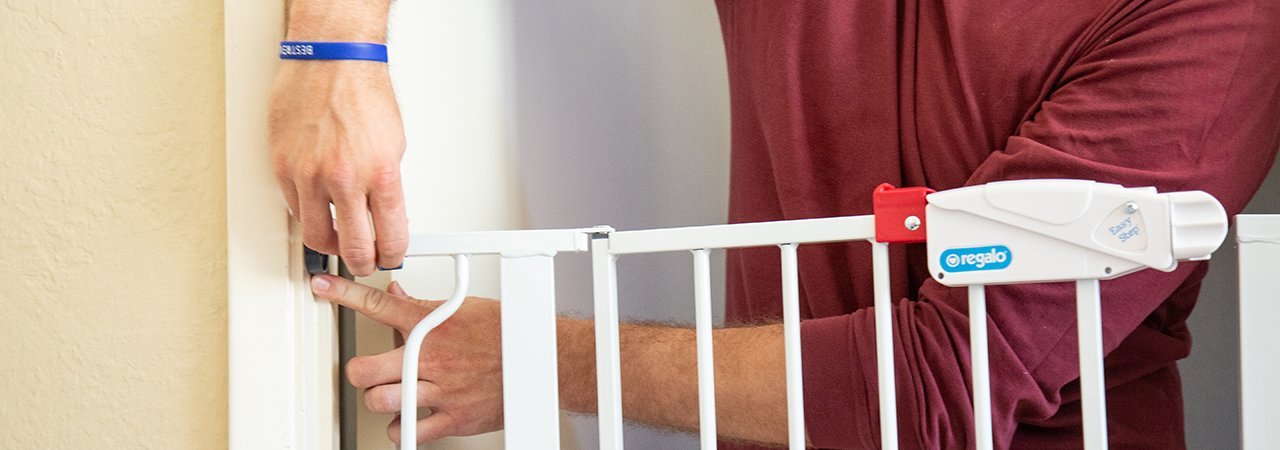
5 Best Baby Gates
| Product | Pros | Cons | Buy Now |
|---|---|---|---|
| Regalo 192-Inch Super Wide Baby Gate | Extra-wide coverage, durable construction | May require extra support in some setups | Buy Now |
| Summer Infant Secure Space Extra Wide Safety Gate | Easy to install, stylish design | May not fit all doorway widths | Buy Now |
| Yoofor Retractable Baby Gate | Space-saving design, convenient operation | May be less sturdy than traditional gates | Buy Now |
| Regalo Easy-Step Extra-Tall Gate | Extra tall for added safety, easy to use | Installation may leave holes in walls | Buy Now |
| Summer Infant Multi-Use Decorative Extra Tall Walk-Thru Baby Gate | Elegant design, versatile use | Price may be higher than other options | Buy Now |
Best baby gates
As your little one starts to crawl or walk, investing in a baby gate becomes essential. These gates serve as a safeguard, preventing your toddler from potential hazards such as stairs or off-limits rooms like kitchens.
They can also provide a safe separation between your child and pets, ensuring both your baby and furry friends stay safe.
Types of baby gates
Pressure-mounted
Pressure-mounted gates are simple to install without any hardware, making them a popular choice for many parents. They use tension to hold the gate in place and are typically less expensive.
However, they can topple over if not installed correctly or if used in areas with uneven walls, posing a safety risk.
Hardware-mounted
For enhanced security, hardware-mounted gates are the way to go. They are installed by attaching hardware directly to your walls, providing a sturdy barrier.
The downside is the small holes left in your walls, which may require patching later. Additionally, if you need to remove the gate temporarily, it involves disassembling it completely.
Freestanding
Freestanding gates do not require installation; you simply place them where needed. They are great for protecting your child from specific hazards, such as fireplaces or delicate decor.
Keep in mind, though, that their effectiveness depends on their ability to stand securely on their own.
Features to consider
Height and width
Choosing the right height and width for your baby gate is crucial. Most standard gates are about 30 inches tall and range from 29 to 45 inches wide. Some specialized gates can extend up to 192 inches for larger spaces.
Slat spacing
Be mindful of the spacing between slats on the gate, as gaps larger than three inches can pose a safety risk for small children and pets.
Latch mechanisms
Different gates come with various latch types, from dual-action latches to pressure-release handles. It’s advisable to test these mechanisms to find one that works best for you.
Auto-close feature
Some gates feature an auto-close option, which can be a lifesaver for busy parents. This allows the gate to close automatically after being opened, providing one less thing to worry about.
Material considerations
When selecting the material for your baby gate, consider the following:
- Wood gates can splinter, so ensure they are well-finished with smooth edges.
- Metal gates are generally more durable and sturdy than wood or plastic options.
- Mesh gates can be retractable, but verify their safety standards through relevant certifications.
Additional considerations
Before making your purchase, think about the following:
Placement
Identify where you intend to use the gate, as this influences your choice. For instance, gates at the top of stairs should be hardware-mounted for maximum security.
Child’s height
Your gate should be at least three-quarters the height of your child. As they grow, reassess the gate’s effectiveness.
Safety tips
While baby gates enhance safety, they should not substitute for adult supervision. Here are some essential safety tips:
- Use hardware-mounted gates at the top of stairs.
- Ensure gates are properly closed and latched at all times.
- Regularly inspect gates for stability and secure connections.
- Look for JPMA certification to confirm safety standards.
FAQ
Q: How can I prevent a pressure-mounted gate from leaving marks on my walls?
A: Consider using products designed to prevent rubber marks, like wall savers specifically made for pressure gates.
Q: I don’t want to drill holes in my walls. Which gate should I choose?
A: A pressure-mounted gate is best for areas that do not require drilling, while a hardware-mounted gate is better for high-risk areas like stairs.
Q: Are all gates safe for stair use?
A: No, for stair safety, a hardware-mounted gate is recommended to ensure it stays securely in place.