
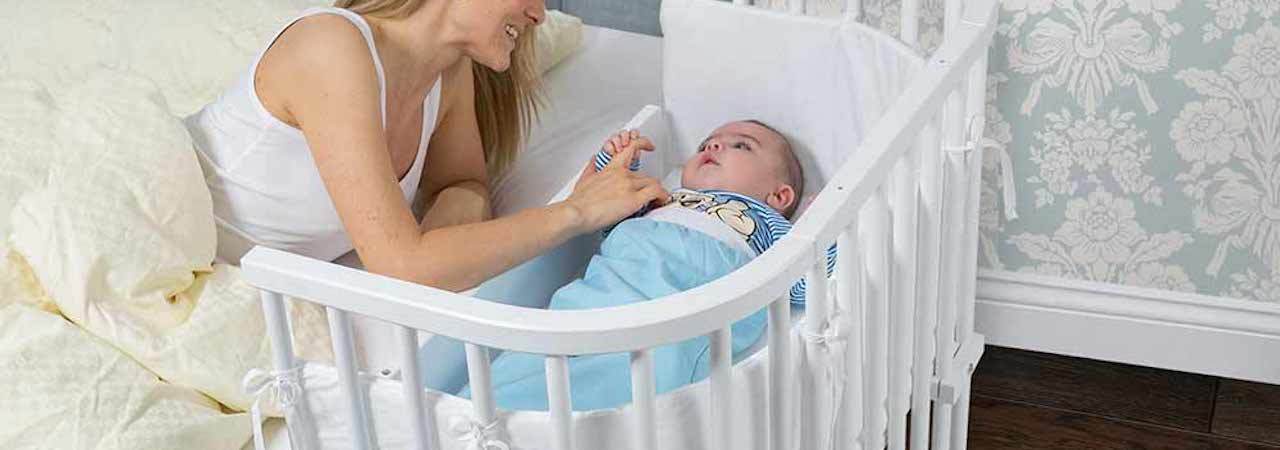
5 Best Bedside Sleepers for Newborns
Halo BassiNest Soothing Swivel Sleeper 3.0
We found the Halo BassiNest perfect for parents wanting a versatile option that allows easy access during the night.
- Swivels 360 degrees for better positioning.
- Mesh sides for enhanced ventilation and visibility.
- It can be a bit bulky for smaller rooms.
Buy Now
Dream On Me Skylar Bassinet & Bedside Sleeper
We thought the Dream On Me Skylar was ideal for parents seeking a stylish yet functional design.
- Elegant design that complements nursery décor.
- Lightweight and easy to move around the house.
- Only suitable for infants up to 15 lbs.
Buy Now
RONBEI Baby Bedside Bassinet
We appreciated the RONBEI for its sturdy construction and ease of use, making it a great choice for new parents.
- Easy to assemble with adjustable heights.
- Includes a side pocket for essentials.
- Can be quite heavy to lift for some parents.
Papablic 2-in-1 Bonni Baby Bassinet & Bedside Sleeper
We found the Papablic versatile, working well as both a bedside sleeper and a standalone bassinet.
- Can be used as a portable sleeper for travel.
- Breathable mesh sides for safety.
- The mattress could be firmer for some babies.
Arm’s Reach Concepts Clear-Vue Co-Sleeper
We thought the Arm’s Reach Clear-Vue provided a clear view of our baby while ensuring safety.
- Allows for easy monitoring of your baby.
- Sturdy and reliable for nightly use.
- Setting it up can be a bit complex initially.
Buying Guide for Choosing the Best Bedside Sleepers
Many parents appreciate the convenience of co-sleeping, but experts advise that babies are safest with their own sleeping space. Bedside sleepers, often called co-sleepers, give you the closeness of having your baby nearby for feeding and comforting, without the associated risks of traditional co-sleeping.
Choosing the right bedside sleeper is crucial for your baby’s safety and comfort. With many options available, we’ve compiled a guide to help you make an informed decision.
Types of Bedside Sleepers
In-bed Co-sleeping Bassinets
In-bed co-sleepers sit directly on your mattress, either as a sturdy frame or a soft nest with foam sides. However, the American Academy of Pediatrics has raised concerns regarding their safety, so we recommend considering other options.
Bedside Co-sleeping Bassinets
These are designed to attach securely to your bed, providing your baby with their own space while keeping them close. You can easily see and reach your little one without getting out of bed.
Pros:
- Allows for nighttime nursing without leaving your bed.
- Minimises the risk of blankets covering your baby.
- Does not take up space in your bed, allowing for more comfortable sleep.
Cons:
- Compatibility issues with certain bed types.
Considerations for Selecting a Co-sleeper Bassinet
Adjustability
It’s important for bedside co-sleeping bassinets to adjust to the height of your bed. Any gaps can pose a suffocation risk, so consider models that adjust easily to various heights.
Portability
Some bassinets are designed for portability, making them great for travel or moving around the house. Models that detach from the frame are particularly handy.
Size
The size of the bassinet will determine how long your baby can use it. Opt for larger models to ensure your baby has enough room as they grow.
Ventilation
Good ventilation is key to preventing overheating and ensuring safe breathing. Look for bassinets with mesh sides for enhanced airflow.
Bedside Bassinet Prices
Costs vary widely depending on design and features. Here’s a general breakdown:
Foam Nest-style Bedside Sleepers
Expect to pay around £40 for basic models, up to £160 for more premium options.
In-bed Sleepers with Solid Frames
These typically range from £30 to £50.
Bedside Sleeper Bassinets
Prices start at approximately £80, with high-end models costing up to £200 or more.
Tips for Safe Co-sleeping
- Choose a bassinet that meets safety standards. Look for models with the JPMA seal of approval.
- Avoid bringing your baby into your bed. After feeding, return them to their bassinet to ensure their safety.
- Ensure the mattress fits snugly. Gaps can pose significant risks.
- Keep blankets away from the bassinet. Use separate bedding if necessary.
- Follow all usage instructions carefully. This will help ensure safe use of the sleeper.
FAQ
Q. When will my baby outgrow the co-sleeper bassinet?
A. This can vary, but most babies outgrow their bassinets between three to six months, depending on their size and development.
Q. Are co-sleeper bassinets easy to clean?
A. Look for models with washable covers or easy wipe-down materials to handle the inevitable messes.
Q. How should I position my baby in the co-sleeper?
A. Always place your baby on their back to sleep, as this reduces the risk of SIDS.