
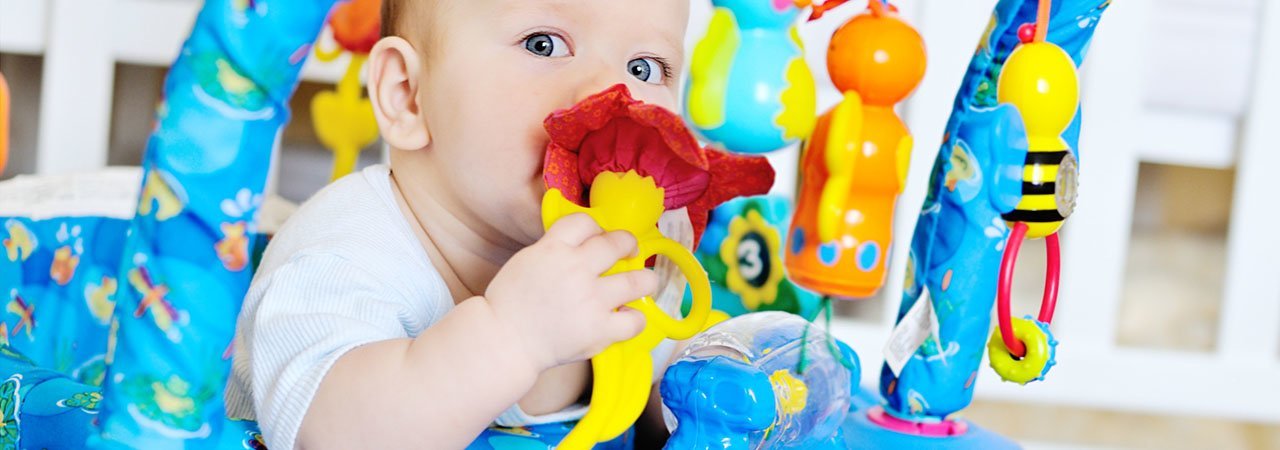
Best Baby Jumpers for Fun and Development
Fisher-Price Jumperoo Rainforest
We found this jumper to be perfect for babies who love vibrant colours and engaging activities, making playtime a joyful experience.
- Features multiple toys that stimulate visual and auditory senses.
- Sturdy construction ensures safety during play.
- It can take up a bit more space than some parents might prefer.
Baby Einstein Neighborhood Activity Jumper
This jumper is ideal for curious babies, offering a variety of toys that provide sensory stimulation and encourage exploration.
- The 360-degree rotating seat allows babies to access all toys easily.
- It has an adjustable height feature to grow with your baby.
- Assembly can be a bit tricky for some parents.
Bright Starts Finding Nemo Sea of Activities Jumper
We thought this jumper suited babies who love playful designs, as it features a delightful underwater theme that captures their imagination.
- Engaging toys and lights keep babies entertained.
- Compact design makes it easy to store away when not in use.
- Some parents may find the seat padding could be softer.
Evenflo ExerSaucer Doorway Jumper
This doorway jumper is great for parents looking for an affordable option that doesn’t compromise on fun or safety for their baby.
- Easy to set up and take down when needed.
- Lightweight design makes it portable and convenient.
- It requires a suitable door frame for secure installation.
Skip Hop Explore & More Jumpscape Fold-away Jumper
This jumper stood out to us for its foldable design, making it perfect for families with limited space or those on the go.
- Innovative foldable design for easy storage and travel.
- Includes a variety of toys that promote sensory development.
- It might feel a bit small for older babies or larger toddlers.
Best baby jumpers
If you’re looking to add some fun and exercise to your baby’s day, a baby jumper might be the perfect solution. These devices allow babies to stand and bounce, providing an opportunity for them to strengthen their legs while enjoying a playful experience. We love witnessing the joy on a baby’s face as they discover their newfound abilities in a jumper.
The market offers a plethora of options, ranging from stationary jumpers with interactive activity trays to doorway jumpers, which some may also refer to as Johnny Jump Ups. With such a wide variety, you can choose a jumper that fits your budget, space, and your baby’s developmental stage.
At FranksWaffle, we aim to make your shopping journey easier. Below, we’ve compiled a list of tried-and-true baby jumpers that are sure to delight your little one, along with useful tips to help you select the ideal one.
What is a baby jumper?
A baby jumper is a stationary apparatus where your child can sit securely and “jump” using elastic bands for support. Some models are quite basic, allowing only for bouncing, while others include trays filled with engaging toys to keep your baby entertained.
Types of baby jumpers
Standard stationary jumper
A standard stationary jumper, as the name suggests, remains fixed in one spot. It includes a seat and an elastic cord, allowing your baby to bounce. The most basic versions lack any added toys or entertainment and focus solely on bouncing.
Activity centre jumper, or exersaucer
Activity centre jumpers consist of a seat, elastic cord, frame, and a tray filled with a variety of toys. While the toy selection may vary, their main goal is to stimulate and engage your baby during their jumping sessions.
Doorway jumper
These jumpers don’t have a built-in frame but attach via bungee cords to a door frame. While they can be slightly cumbersome to set up and take down, they often cost less than stationary jumpers or exersaucers.
Key considerations
Height adjustability
Some baby jumpers offer height adjustments to accommodate your growing child. Look for models that specify the number of height settings available, as this will help ensure your baby remains comfortable as they grow.
Seat comfort
Seat designs can vary significantly. The best jumpers come with removable seat pads that can be machine washed. Plush padding is a desirable feature, especially for younger infants who need extra support. We recommend choosing a jumper with a high seatback and support for infants who are still mastering head control.
For stationary activity jumpers, ensure your baby can comfortably reach the toys from their seat. Some units even feature seats that rotate 360°, allowing babies to easily access all their toys, which we found to be a fantastic feature to reduce frustration.
Weight limit
Safety is paramount, so always adhere to the weight limits specified by the manufacturer, typically ranging from 20 to 30 pounds, although some models may allow up to 60 pounds. It’s crucial to use the jumper within these guidelines to avoid safety hazards.
Toy features
Activity jumpers often include a saucer surrounding the baby’s seat, filled with toys that stimulate various senses — from visually stimulating lights to musical elements and textured items.
When selecting a jumper, consider the types of toys your baby enjoys. Choosing one that aligns with their interests can keep them engaged longer. Additionally, if you wish to add or replace toys later, many jumpers allow for easy attachment of additional toys.
Battery requirements
If you opt for an activity jumper with electronic features, be prepared for some battery expenses. While these features enhance playtime, they do require regular battery replacements. Rechargeable batteries can help mitigate ongoing costs.
Safety tips for baby jumpers
While some parents have concerns regarding the safety of baby jumpers, many others find them beneficial. To ensure safe usage, follow these guidelines:
- Always position the jumper on a flat, stable surface.
- Keep the area around the jumper free from hazards, like sharp objects and pets.
- Avoid attaching toys with strings, as they pose a strangulation risk; use toy links instead.
- Stay in the room while your baby is using the jumper.
- Do not move the jumper with your baby inside.
- Keep jumpers clear of stairs, pools, and other potential dangers.
- Stop using the jumper once your baby exceeds weight or height limits.
Safety with doorway jumpers
If you’re considering a doorway jumper, be aware of specific safety considerations. These jumpers can be a cost-effective way to entertain your baby but require careful attention to safety.
Preventing collisions
Doorways are generally hard surfaces that can be dangerous for babies. To mitigate risks, many jumpers come with padding around the seat to cushion any potential bumps against the walls. Although this padding helps, it’s not foolproof, so precautions are still necessary.
Clamp safety
Doorway jumpers attach with clamps that can potentially fail, leading to falls. Common causes for failure include:
- Excessive swinging
- Defective clamps
- Improper installation
- Incompatible door moulding
Note: Be aware that some doorway jumpers have been recalled due to clamp issues.
Placement of doorway jumpers
When choosing where to hang your doorway jumper, consider foot traffic; select a doorway that allows easy access without needing to navigate around the baby. Ensure adequate moulding is present for the clamp to grip securely. If your doorway lacks trim, look for a jumper with a hook option or consider a stationary jumper instead.
FAQ
Q: At what age and weight should I get my baby a jumper?
A: Your baby should be able to hold her head up and bear some weight on her legs to use a jumper effectively. The focus is more on development than age or weight. Ideally, babies between these milestones are the best candidates for jumpers.
Q: What is the difference between a jumper and a walker?
A: Jumpers are stationary activity centres, allowing slight movement but not actual mobility. They provide exercise and sensory engagement. In contrast, baby walkers enable children to move across the room while seated, although they have fallen out of favour due to safety concerns.
Q: How long should my baby use a jumper each day?
A: Recommendations vary, but many experts advise a maximum of 20 minutes per day to prevent hindering walking development. However, some parents find longer durations acceptable. Ultimately, it’s up to you to decide what works best for your baby.